
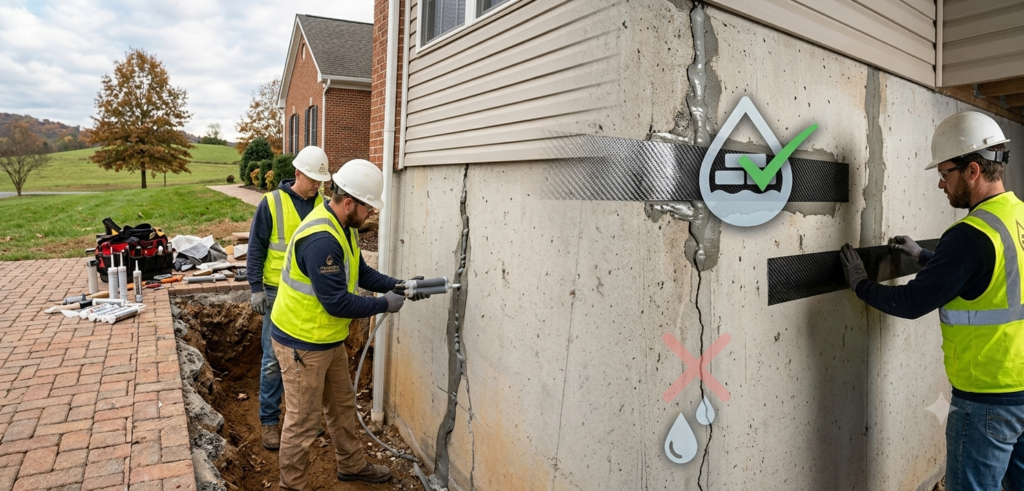
Understanding Foundation Cracks in Virginia Homes
Foundation cracks are a common concern for homeowners throughout Virginia, particularly in properties exposed to changing soil conditions, seasonal temperature fluctuations, heavy rainfall, and moisture accumulation. Although some cracks develop naturally as concrete cures and settles, others can indicate more serious structural movement or water intrusion that requires professional attention. Identifying the difference between minor cosmetic cracks and potentially significant foundation problems is essential for protecting the safety, stability, and long-term value of your property. When cracks are left unaddressed, water can seep through the foundation walls, dampen basement surfaces, damage stored belongings, and contribute to persistent moisture problems. Over time, certain types of foundation damage may worsen, making repairs more complicated and expensive. At Founders Waterproofing, we help homeowners understand the causes of foundation deterioration and determine appropriate solutions to protect their properties against further damage.
What Causes Foundation Cracks in Virginia?
Virginia’s varied climate and geological conditions can contribute to foundation cracking in several ways, depending on the property’s location, construction methods, and surrounding soil composition. Expansive clay soils can absorb moisture during wet periods and shrink during dry weather, creating pressure changes that affect foundation walls and footings. In areas with poorly drained soil, prolonged rainfall can cause water to accumulate around the foundation, increasing hydrostatic pressure against basement walls. Seasonal freeze and thaw cycles can also affect moisture within soil and concrete, potentially contributing to surface deterioration and movement. Improper site grading, inadequate drainage systems, poorly compacted backfill, and construction deficiencies may further increase the risk of foundation damage. Understanding these underlying factors allows us to recommend repairs that address not only visible cracks but also the conditions that may have caused them.
Recognizing the Different Types of Foundation Cracks
Foundation cracks can appear in several patterns, and their shape, width, location, and progression can provide useful clues about the underlying problem. Vertical cracks often develop because of concrete shrinkage or minor settlement, although some may allow groundwater to enter a basement or crawl space. Horizontal cracks in poured concrete or masonry foundation walls can be more concerning because they may indicate lateral soil pressure or wall movement. Diagonal cracks may develop around windows, doors, corners, or other structural openings when different sections of a foundation settle unevenly. Stair-step cracks commonly appear in mortar joints within concrete block or brick foundations and may indicate settlement, shifting soil, or structural movement. At Founders Waterproofing, we encourage property owners to pay attention to changes in existing cracks and seek a professional assessment when damage appears to be expanding, recurring, or accompanied by other signs of foundation distress.
Warning Signs That Your Foundation Needs Professional Attention
Visible cracks are not the only indicators that a foundation may require repair, and homeowners should consider the condition of the entire structure when evaluating potential problems. Doors and windows that suddenly become difficult to open or close may indicate that movement is affecting the alignment of the building. Uneven floors, sloping surfaces, gaps between walls and ceilings, and separating trim can also develop when parts of a structure shift. In basements, damp spots, water stains, peeling paint, efflorescence, and musty odors may suggest that moisture is entering through foundation walls. Persistent water intrusion can damage interior finishes and create conditions favorable to mold growth when moisture is not properly controlled. If you notice bowing foundation walls, rapidly widening cracks, substantial displacement, or sudden structural changes, arrange a prompt professional evaluation rather than assuming the damage is merely cosmetic.
Why Foundation Crack Repair Should Not Be Delayed
Delaying foundation crack repair can allow a manageable problem to develop into a more extensive issue, particularly when groundwater or continuing structural movement is involved. Even a relatively narrow crack can provide a pathway for water to enter a basement during heavy rainfall or periods of elevated groundwater pressure. Repeated moisture exposure may damage flooring, drywall, insulation, stored possessions, and other materials located near the affected area. When a crack is associated with ongoing settlement or lateral pressure, simply covering the visible opening may conceal the symptoms without addressing the underlying cause. Continued movement can place additional stress on nearby sections of the foundation and potentially affect other parts of the building. Taking action early helps us identify the source of the problem, evaluate the appropriate repair method, and reduce the likelihood of avoidable damage and more extensive restoration work.
Professional Methods for Foundation Crack Repair
The most appropriate repair method depends on the foundation material, crack pattern, moisture conditions, and whether the damage is stable or associated with continuing movement. For certain nonstructural cracks in poured concrete, epoxy injection may be suitable when a strong bond and restoration of continuity are required. Polyurethane injection is often used to seal leaking cracks because the material can expand within the opening and help block water infiltration. Surface sealants and compatible repair materials may be appropriate for some minor cracks when the surrounding concrete is stable and the repair conditions permit their use. Masonry foundations may require specialized mortar repairs, crack treatment, or additional measures depending on the condition of the blocks, joints, and surrounding structure. When cracks result from substantial settlement or lateral wall pressure, more comprehensive corrective work may be necessary, and a qualified structural engineer may need to evaluate the foundation before repairs proceed.
How Water Intrusion Affects Foundation Cracks
Water intrusion is one of the most important concerns associated with foundation cracks because moisture can enter a property even when the visible opening appears relatively small. During heavy rainfall, water can accumulate around the exterior foundation when the soil cannot drain efficiently or the property has inadequate grading. This accumulation can increase hydrostatic pressure, forcing water through cracks, construction joints, and other vulnerable areas of the foundation. Once moisture enters the basement or crawl space, it can affect indoor humidity, damage building materials, and contribute to persistent musty odors. Repeated leaks may also indicate that exterior drainage, downspouts, gutters, or waterproofing systems are not functioning effectively. Our approach focuses on understanding the relationship between the crack and surrounding moisture conditions so that sealing the opening can be combined with appropriate drainage or waterproofing improvements when necessary.
The Importance of Drainage and Waterproofing
Repairing a foundation crack can resolve a particular entry point for water, but long-term protection may require improvements to the systems that manage groundwater around your home. Proper grading helps direct rainwater away from the foundation instead of allowing it to collect beside basement walls. Clean, functional gutters and properly positioned downspouts reduce the amount of roof runoff discharged near the building. Depending on the property’s conditions, exterior waterproofing membranes, drainage systems, sump pumps, or other moisture-control measures may also be appropriate. In homes with recurring basement leaks, evaluating these components can help determine whether the problem extends beyond the visible crack. Founders Waterproofing considers the importance of addressing moisture sources alongside suitable crack repairs to help homeowners develop a more reliable strategy for protecting their foundations.
Foundation Crack Repair for Different Types of Foundations
Virginia homes feature a variety of foundation systems, including poured concrete walls, concrete masonry blocks, brick foundations, and crawl space foundations, each of which presents different repair considerations. Poured concrete foundations may develop shrinkage cracks, settlement-related openings, or cracks that allow water to penetrate the basement. Concrete block walls can experience cracking along mortar joints, while horizontal displacement or bulging may indicate pressure that requires more extensive evaluation. Older brick and masonry foundations may need compatible repair materials and careful attention to the condition of existing mortar and masonry units. Crawl space foundations can also develop cracks or moisture-related problems that affect the surrounding framing, insulation, and indoor air quality. Selecting the correct repair approach requires an understanding of the foundation’s construction, the severity of the damage, and the environmental conditions affecting the property.
How Virginia’s Weather Can Influence Foundation Damage
Weather patterns across Virginia can place varying demands on residential foundations throughout the year, particularly when periods of heavy rain alternate with dry conditions. During prolonged wet weather, saturated soil may increase pressure against basement walls and allow groundwater to reach vulnerable areas of the foundation. Extended dry periods can cause some clay-rich soils to shrink, potentially contributing to uneven support beneath sections of a building. Freezing temperatures can affect water retained in cracks and surrounding soil, while repeated seasonal changes may expose existing weaknesses in concrete and masonry. Properties located on slopes, in areas with drainage challenges, or near disturbed construction soils may face additional site-specific risks. Monitoring foundation conditions after significant weather events and maintaining effective drainage can help homeowners recognize emerging concerns before they become more difficult to manage.
What to Expect During a Foundation Crack Inspection
A professional foundation inspection begins with an assessment of the visible damage, including the crack’s location, direction, width, and apparent progression. The inspection may also consider nearby walls, floors, windows, doors, and other structural elements for signs of movement or displacement. Moisture stains, active leaks, efflorescence, and damp areas can help identify whether water intrusion is contributing to the problem. Exterior conditions, including soil grading, downspout placement, drainage patterns, and the condition of accessible foundation surfaces, may provide further insight into the source of the damage. Depending on the findings, additional testing or an evaluation by a structural engineer may be appropriate, particularly when significant movement or wall instability is suspected. A clear assessment helps establish whether the repair should focus on sealing a stable crack, improving waterproofing, correcting drainage, or addressing a more substantial structural concern.
Factors That Affect Foundation Crack Repair Costs
The cost of foundation crack repair in Virginia varies according to the nature of the damage, the repair method, accessibility, and the amount of additional work needed to address the underlying problem. A single, stable crack that can be treated through an appropriate injection method will generally involve different labor and material requirements than a foundation wall showing extensive displacement. Repairs may become more involved when water continues to enter the property, exterior excavation is necessary, or existing drainage systems require improvements. Foundation material, crack depth, moisture conditions, and the need for specialized equipment can also influence the overall scope of work. When structural movement is suspected, professional engineering assessment and corrective measures may add to the project requirements. Rather than relying on a generic estimate, homeowners should obtain an inspection and a clearly defined repair recommendation that explains the proposed work and any additional measures needed to protect the foundation.
Preventing Future Foundation Cracks and Water Problems
Although not every foundation crack can be prevented, regular property maintenance can help reduce avoidable moisture-related damage and identify developing problems earlier. Keep gutters clear of debris and make sure downspouts direct roof runoff away from the foundation. Maintain appropriate soil grading so that surface water flows away from the building rather than collecting along basement walls. Avoid allowing irrigation systems, leaking outdoor faucets, or concentrated runoff to keep the soil near the foundation excessively wet. Inspect accessible basement and crawl space areas periodically for new cracks, damp patches, musty odors, and changes in existing damage. If a crack has already been repaired, monitor the surrounding area for recurring moisture or renewed movement and arrange further evaluation if warning signs return.
Choosing a Foundation Crack Repair Company in Virginia
Selecting a qualified foundation repair contractor is an important step toward protecting your property and ensuring that the recommended solution addresses the actual cause of the damage. Homeowners should look for a company that evaluates the condition of the foundation before recommending a particular repair method. A reliable assessment should distinguish between cracks that primarily require moisture sealing and those that may indicate settlement, lateral pressure, or other structural concerns. It should also explain whether drainage improvements, waterproofing work, or additional professional evaluation may be necessary. Clear communication about the repair process, materials, expected results, and applicable warranties helps property owners make informed decisions. At Founders Waterproofing, we recognize that every foundation presents different challenges, and we believe that an effective repair plan should be based on the property’s specific condition rather than a one-size-fits-all recommendation.
Protect Your Virginia Home With Professional Foundation Crack Repair
Foundation cracks should never be evaluated solely by their appearance because the underlying causes can range from normal concrete shrinkage to ongoing structural movement or groundwater pressure. Understanding the crack pattern, identifying signs of moisture intrusion, and evaluating the surrounding soil and drainage conditions are essential steps toward choosing an appropriate solution. Timely repairs can help limit water entry, protect interior building materials, and reduce the risk of further deterioration when the underlying problem is properly addressed. Homeowners should pay particular attention to widening cracks, horizontal wall damage, recurring leaks, and other changes that suggest the foundation requires professional evaluation. Combining suitable crack repair with effective drainage and waterproofing measures can provide a more comprehensive approach to long-term foundation protection. If you have noticed cracks in your basement walls, foundation, or crawl space, contact Founders Waterproofing to discuss your concerns and determine the next steps toward protecting your Virginia property.