
Understanding Virginia’s Diverse Housing Landscape
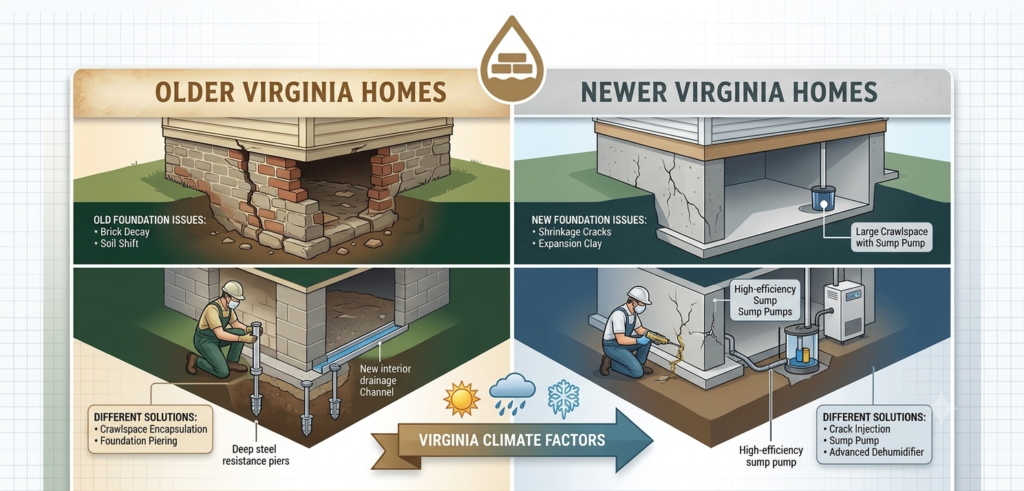
Virginia is home to a diverse range of residential properties, from historic houses built more than a century ago to modern homes constructed with contemporary materials and engineering methods. Although these properties may experience similar foundation problems, the underlying causes and appropriate repair methods can differ significantly. Older homes often have foundations made from brick, stone, or early concrete mixtures, while newer properties typically rely on reinforced concrete and modern construction techniques. These differences influence how foundations respond to moisture, soil movement, structural loads, and seasonal temperature changes. Homeowners must understand that a repair method suitable for one property may not provide the same results for another. At Founders Waterproofing, we recognize that effective foundation repair begins with understanding a home’s age, construction history, soil conditions, and existing structural characteristics.
Virginia’s varied geography adds another layer of complexity to foundation maintenance. Properties in Northern Virginia may encounter expansive clay soils, drainage challenges, and settlement associated with changing moisture levels. Homes in the Piedmont region can experience different soil compositions and varying subsurface conditions, while properties in mountainous areas may face sloping terrain, runoff, and pressure against foundation walls. Coastal areas can present additional concerns related to groundwater, flooding, and soil saturation. These regional differences influence how water moves around a property and how the ground supports its foundation. Understanding local environmental conditions is essential when determining which repair strategies will deliver reliable and lasting results.
How Older Homes Develop Foundation Problems
Older homes frequently have foundations that were built using construction practices different from those used today. Many historic properties feature stone masonry, brick foundations, lime-based mortar, or unreinforced concrete that has been exposed to decades of environmental stress. Although these materials can remain functional for generations, they may become vulnerable to deteriorating mortar joints, water infiltration, cracking, and gradual movement. Previous renovations may also have altered the way weight is distributed throughout the structure, particularly when homeowners have added rooms, finished basements, or replaced major building components. In some cases, earlier repairs may have concealed existing structural weaknesses without addressing their original causes. These factors make a thorough assessment particularly important before selecting a foundation repair method.
Age alone does not mean a home’s foundation is failing or that extensive repairs are necessary. Some older houses were built with excellent materials and have remained stable because their foundations were properly constructed and their surrounding soil conditions have stayed relatively consistent. However, decades of exposure to rainfall, plumbing leaks, groundwater fluctuations, and repeated changes in soil moisture can gradually affect structural performance. Mortar can weaken, masonry units can shift, and small cracks can develop into more significant concerns when movement continues. Homeowners may notice uneven floors, sticking doors, gaps around windows, or cracks that appear near the corners of rooms. These symptoms deserve attention because identifying the underlying cause early can help prevent unnecessary repairs and reduce the risk of further damage.
Why Historic Foundation Materials Require Specialized Repair Methods
The materials used in older foundations often require a different repair approach from the methods commonly used in modern construction. Traditional brick and stone foundations may depend on mortar joints to distribute loads and maintain structural stability, making the condition of those joints especially important. Replacing deteriorated mortar with an incompatible material can restrict moisture movement or create stress within older masonry. Similarly, applying an impermeable coating to a foundation that was designed to manage moisture differently can contribute to trapped dampness and deterioration. Repairs must account for the original construction method, the condition of existing materials, and the way moisture naturally moves through the structure. Selecting compatible materials and appropriate repair techniques helps preserve the foundation while addressing its functional weaknesses.
Older homes may also require more careful investigation because their original construction records are not always available. Previous owners might have added drainage systems, installed support columns, modified basement walls, or repaired cracks without documenting the work. Hidden conditions behind finished walls and flooring can make it difficult to determine whether visible symptoms are related to structural movement, water intrusion, or an earlier repair that has deteriorated. A professional inspection can help establish which areas need immediate attention and which conditions can be monitored over time. Depending on the findings, appropriate solutions may include masonry repointing, localized structural reinforcement, improved drainage, or carefully designed underpinning. The objective is to stabilize the structure without introducing unnecessary alterations to materials that have performed well for many years.
Foundation Challenges in Newer Virginia Homes
Newer homes benefit from modern building codes, improved construction materials, and more sophisticated foundation engineering, but they are not immune to foundation problems. Many issues develop because of the conditions beneath and around the structure rather than because of the foundation materials themselves. Poorly compacted fill soil, inadequate site preparation, improper grading, and changes in groundwater conditions can contribute to uneven settlement. When soil beneath one part of a home compresses more than soil beneath another section, the resulting differential movement can place stress on walls, floors, and structural connections. Cracks may appear in drywall, brick veneer, concrete slabs, or the areas surrounding windows and doors. Although some minor cracking can occur as building materials shrink or settle, progressive changes should be evaluated to determine whether a more significant problem exists.
Drainage problems are another important consideration for newer properties. Construction can change the natural flow of surface water, especially when landscaping, paved driveways, patios, and retaining walls redirect runoff toward the home. Downspouts that discharge too close to the foundation can concentrate water in areas where the soil is already vulnerable to saturation. Poorly installed drainage systems or improperly managed groundwater can also increase hydrostatic pressure against basement walls. Over time, these conditions may contribute to water seepage, wall movement, or settlement in areas with susceptible soils. Addressing drainage and soil conditions can therefore be just as important as repairing the visible foundation damage.
The Role of Soil Conditions in Foundation Repair
Soil behavior is one of the most important factors when evaluating foundation problems in Virginia. Certain clay-rich soils expand when they absorb moisture and shrink when they dry, creating repeated changes in the support available beneath a home. If moisture levels vary significantly across the footprint of a building, different sections of the foundation may move at different rates. Sandy or loose soils can present different concerns, including erosion, settlement, or the loss of supporting material when water moves through the ground. Properties built on recently placed fill may experience settlement if the material was not adequately compacted during construction. Because these conditions can occur beneath both historic and modern homes, a successful repair plan must account for the soil rather than focusing exclusively on visible cracks.
The correct solution depends on the depth, extent, and cause of the movement. In some situations, improving surface drainage and correcting concentrated water discharge may reduce the conditions contributing to foundation distress. Other properties may require engineered underpinning or helical or push piers designed to transfer structural loads to more stable supporting soil. Slab foundations may need different repair considerations from homes with crawl spaces or full basements. Soil testing or a geotechnical evaluation may be appropriate when the cause of movement is uncertain or when the proposed repair requires a more detailed understanding of subsurface conditions. We evaluate these factors carefully because a repair system should address the actual source of the problem rather than simply conceal its visible effects.
Basement Waterproofing and Moisture Management
Water management is especially important for Virginia homes because seasonal rainfall, heavy storms, and fluctuating groundwater levels can affect foundations throughout the year. Older basements may have porous masonry walls, deteriorated mortar joints, or limited drainage systems that allow moisture to enter the building. Newer basements can also experience water intrusion when exterior waterproofing is damaged, drainage systems become obstructed, or surface water accumulates around the foundation. Persistent moisture may contribute to musty odors, damaged finishes, efflorescence, and conditions favorable to mold growth. Water pressure against basement walls can also become a structural concern when the walls are already compromised or the surrounding soil remains saturated. Identifying the source of the water is therefore a critical step in choosing an appropriate waterproofing strategy.
Different properties may require different combinations of moisture-control measures. Exterior grading improvements, properly extended downspouts, functional gutters, and suitable drainage systems can help direct water away from the foundation. Interior drainage systems and sump pumps may be appropriate when groundwater or seepage enters a basement and requires controlled collection and discharge. Older masonry foundations may need compatible repointing or other material-specific repairs before additional waterproofing measures are introduced. Newer homes may benefit from evaluating the condition of their original waterproofing membrane, perimeter drainage, and construction joints. At Founders Waterproofing, we understand that managing moisture effectively requires more than treating the location where water appears because the visible leak may be only one symptom of a larger drainage problem.
Crawl Space Foundations Require Their Own Repair Strategy
Many Virginia homes have crawl space foundations, and the condition of these areas can influence the performance of the entire structure. Older crawl spaces may contain aging support posts, deteriorated masonry piers, exposed soil, or inadequate ventilation and moisture controls. Over time, excessive moisture can affect wooden floor framing, encourage fungal growth, and contribute to conditions that compromise the materials supporting the home. Uneven support can also cause floors to sag, bounce, or slope noticeably from one room to another. Newer crawl spaces may encounter problems when vapor barriers are incomplete, drainage is insufficient, or humidity management was not properly designed or maintained. Although the symptoms can appear similar, the appropriate repair depends on the construction details and the condition of the materials involved.
A comprehensive crawl space assessment should examine the supporting piers, beams, joists, soil surface, moisture levels, and drainage conditions. Depending on the findings, repairs may involve replacing damaged structural components, installing appropriately designed supports, improving water management, or implementing a suitable crawl space encapsulation system. Encapsulation can help control ground moisture when properly designed and installed, but it does not replace structural repairs or correct every possible source of water intrusion. Likewise, adding support posts without determining why the existing supports have shifted may leave the underlying issue unresolved. Maintaining stable soil conditions and controlling moisture are essential parts of protecting a crawl space foundation. A coordinated approach helps homeowners address current concerns while reducing the likelihood of recurring damage.
How Settlement and Structural Movement Affect Different Homes
Foundation settlement occurs when the ground beneath a structure can no longer provide uniform support, causing some portions of the building to move downward. In older homes, settlement may have developed gradually over many decades as soil conditions changed, drainage patterns evolved, or original foundation materials deteriorated. Some historic structures have experienced minor movement that stabilized long ago, while others continue to develop new symptoms. In newer homes, settlement may occur when underlying fill compresses, site preparation is inadequate, or changes in moisture affect the supporting soil. The timing and pattern of the movement can help professionals distinguish between long-standing conditions and potentially active structural problems. However, visual symptoms alone cannot establish the cause with certainty.
Differential settlement can create a range of warning signs throughout a property. Homeowners may observe diagonal cracks extending from door or window corners, gaps between walls and ceilings, uneven floors, or doors that no longer close properly. Exterior brickwork may develop stair-step cracks, while basement walls may show horizontal or vertical cracking depending on the forces acting on them. Some cracks result from normal material shrinkage or nonstructural movement, but cracks that widen, reappear after repairs, or accompany noticeable distortion deserve further investigation. Professionals may use measurements, crack monitoring, level surveys, and other assessment methods to understand the extent of movement. The resulting repair plan should be based on the building’s structural needs and the evidence collected during the inspection.
Choosing Between Foundation Piers, Wall Reinforcement, and Other Repairs
Foundation repair systems serve different purposes, which is why homeowners should not assume that one method is suitable for every property. Underpinning with engineered piers may be considered when sections of a foundation need additional support because of settlement or unstable near-surface soil. Wall reinforcement systems may be appropriate when basement walls are experiencing inward movement or require additional structural restraint. Carbon fiber reinforcement, steel beams, and other engineered systems have specific applications that depend on wall construction, crack patterns, movement, and the magnitude of the structural forces involved. Concrete crack repair or masonry repointing may address localized defects when the underlying structure remains stable. Drainage improvements may be essential when water contributes to the problem, but drainage alone will not correct significant structural settlement that requires additional support.
Older homes may need repair methods that preserve existing masonry and account for irregular construction, limited access, or previous modifications. Newer homes may provide more predictable construction details, but repair work must still account for the original foundation design, reinforcement, utilities, and soil conditions. A qualified professional should explain why a particular system is appropriate, what problem it is intended to correct, and what limitations it may have. Homeowners should also understand whether the proposed work is intended to stabilize the foundation, lift a settled section, reduce water intrusion, or restore a damaged wall. These objectives are related but are not interchangeable. At Founders Waterproofing, our approach focuses on identifying the problem first so that the recommended repair matches the property’s actual requirements.
The Importance of Professional Foundation Inspections
A professional foundation inspection helps establish whether visible damage is cosmetic, moisture-related, or associated with structural movement. During an assessment, the inspector may examine interior and exterior walls, basement or crawl space conditions, floor elevations, drainage patterns, and the relationship between cracks and other building components. The property’s age and construction type provide useful context, but they should not be used as the sole basis for determining the repair method. Previous renovation work, nearby excavation, plumbing leaks, and changes in landscaping can all influence foundation performance. When conditions indicate potentially significant structural movement, consultation with a qualified structural engineer may be necessary. A geotechnical professional may also be useful when subsurface soil behavior is central to the problem.
An effective inspection should lead to clear findings and practical recommendations. Homeowners should understand which issues require prompt attention, which conditions can be monitored, and which maintenance measures may reduce the risk of further damage. A written scope of work can help explain the proposed repair methods, the areas being addressed, and any limitations associated with the solution. It is also important to discuss drainage requirements, access considerations, warranties, and maintenance responsibilities before work begins. Comparing repair proposals based on the underlying diagnosis and scope is more useful than choosing a contractor solely because the initial price is lower. A careful evaluation can help homeowners make informed decisions and avoid paying for work that does not address the source of the problem.
Preventive Maintenance for Older and Newer Virginia Homes
Preventive maintenance can help reduce the likelihood of foundation problems, regardless of a home’s age. Keeping gutters clear and ensuring that downspouts discharge water away from the foundation can reduce unnecessary moisture accumulation near the structure. Homeowners should periodically inspect exterior grading to identify areas where water collects or flows toward the building. Plumbing leaks should be repaired promptly because persistent underground leaks can alter soil moisture and affect foundation support. Trees and large shrubs should also be considered when evaluating changing moisture conditions around a property, particularly where clay soils are present. Regular inspections of basements, crawl spaces, and accessible foundation walls can help identify developing concerns before they become more extensive.
Older homes benefit from maintenance practices that preserve traditional materials while addressing modern moisture and drainage concerns. Owners should avoid assuming that every historic crack requires structural reinforcement, but they should also avoid dismissing signs of continuing movement as ordinary aging. Newer homes benefit from monitoring settlement patterns, checking the performance of drainage systems, and addressing construction-related deficiencies when they become apparent. Both types of properties should receive prompt attention when water intrusion becomes persistent or structural symptoms begin to progress. Maintaining records of repairs, inspections, and changes in crack width can help professionals evaluate how conditions have developed over time. These practical steps support better long-term decisions and help protect the home’s structural integrity.
Understanding the Cost of Foundation Repair
The cost of foundation repair in Virginia depends on several factors, including the type of foundation, the severity of the damage, the underlying cause, and the accessibility of the affected area. Local soil conditions and the need for additional engineering or geotechnical investigation can also influence the scope of work. Older homes may require specialized masonry repairs, careful excavation, or modifications that preserve existing building materials. Newer properties may require more extensive underpinning or drainage corrections when settlement is associated with site preparation or changing soil conditions. Basement waterproofing, crawl space moisture control, and structural stabilization also involve different materials and labor requirements. As a result, there is no single repair price that accurately applies to every Virginia home.
A reliable estimate should explain the work required to address the diagnosed problem rather than offering a generic price based on the number of cracks or the age of the property. Homeowners should ask whether the proposal includes excavation, drainage modifications, structural engineering, debris removal, and restoration of disturbed areas. They should also clarify whether any additional repairs may be necessary if concealed damage is discovered during the project. Addressing the underlying cause may involve a larger initial investment than applying a surface treatment, but it can help reduce the likelihood of recurring problems. Repair decisions should consider the property’s condition, the urgency of the damage, and the long-term performance of the proposed system. Obtaining a detailed assessment provides a stronger basis for comparing options and planning the project budget.
Protecting Your Virginia Home With the Right Foundation Solution
Older and newer homes can both develop foundation problems, but the reasons for those problems and the most appropriate repair methods may differ substantially. Historic properties often require attention to traditional masonry, aging materials, and decades of accumulated moisture exposure. Newer homes may require closer examination of soil preparation, drainage design, construction details, and early settlement. Virginia’s varied soil conditions and regional weather patterns further influence how foundations perform over time. The most effective repair strategy considers all these factors rather than relying on the property’s age or the appearance of a single crack. Understanding the distinction helps homeowners avoid unsuitable repairs and prioritize the work that matters most.
When you notice cracking, uneven floors, persistent basement moisture, or signs of foundation movement, a professional evaluation can help determine the next steps. Early assessment may identify drainage improvements or localized repairs that can prevent a developing problem from becoming more extensive. More serious conditions may require engineered stabilization, wall reinforcement, or underpinning based on the structural and geotechnical findings. At Founders Waterproofing, we believe that successful foundation repair starts with understanding the property, diagnosing the cause, and selecting a solution suited to its specific construction and environmental conditions. Our goal is to help homeowners make informed decisions about foundation stability, moisture management, and long-term property protection. With the right assessment and a properly designed repair plan, both older and newer Virginia homes can receive solutions tailored to their individual needs.